
The Biden Administration made the right choice by extending the US-China Science and Technology Agreement and committing to amend and strengthen its term.

Mark Cohen (柯恒)
Mark Allen Cohen (柯恒) is currently the Senior Technology Fellow at the Asia Society of Northern California and an Edison Fellow at the University of Akron School of Law. He also serves as a Non-Resident Scholar at the University of California Haas School of Business and University of California, San Diego, and the National Bureau of Asian Research. He previously served as the first Intellectual Property Attaché at the U.S. Embassy in Beijing and as Attorney-Advisor in the Office of International Relations at USPTO. In total, he has over 30 years private, public sector, in house and academic experience on IPR issues in China. This blog represents the opinions of Mark Cohen and any guest authors only and should not be construed as the position of any third party.
Renewing the US-China STA is Not the Question
On August 7, 2023, the Berkeley Center for Law and Technology hosted a three-hour webinar on renewing the US-China Science and Technology Agreement (STA). The agenda and other materials are available here. […]
Upcoming BCLT Program on Science and Technology Collaboration with China
On August 7 at 9 AM (Pacific), BCLT will host a discussion on the current controversy over renewing the US-China Science and Technology Cooperation Agreement. Our keynote speaker will be Prof. John […]
SAMR’s “Choreography” of SEP AML Rulemaking

How should one understand the overlapping rules enacted by SAMR on IP, SEPS and antitrust? Is a new wave of legislation under way? Is China planning on ramping up antitrust enforcement in SEPs? What do these legislative experiments portend in terms of China’s commitments to rule of law and the challenges faced by high tech companies – whether implementer or licensor in China?
Transparency in the Chinese Courts on IP: My new article on “The Case of the Missing Cases”
China’s judicial database is a valuable tool to understanding China’s legal regime for intellectual property. However, a significant cohort of cases are unpublished. This article written by me and published by the Hinrich Foundation, discusses how to use this and other databases effectively, while at the same time recognizing that there may be limits to their overall comprehensiveness.
Update on Events and Recordings

Upcoming events: On July 13 at 9:30 AM, the Asia Society of Northern California is sponsoring a discussion with a group of international journalists on Briefing on US-China Technologic Competition and Its Global […]
Thinking of Traveling to China — Join us on July 13
On July 13, 2023, from 5 – 6:30 PM (Pacific) the Berkeley Center for Law and Technology will be hosting a discussion on “China Post-Pandemic” and the current environment for engaging China […]
Parallel Play: How the United States and China Are Addressing Unethical Practices of IP Practitioners Filing at the USPTO
My article “Parallel Play: The Simultaneous Professional Responsibility Campaigns Against Unethical IP Practitioners by the United States and China” was recently published in the Akron Law Review (Vo. 56, Issue 2). The […]
My Reflections on Testifying Before Congress – 2023
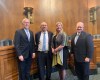
Over the course of the last three months, I spoke at a trifecta of Congressional hearings: the House Judiciary Committee, the Senate Judiciary Committee, and the Congressional US-China Economic and Security Review Commission. Before I had testified I was pessimistic about the prospects for positive IP-related legislation in our national competitive interests. I am now mildly optimistic that Congress can pass necessary IP legislation if both parties in Congress and the Administration work together.
Rest in Peace, Judge Ronald S. Lew

I just received word that Judge Ronald Lew 刘成威; of the Central District of California, has passed away. Judge Lew was a great supporter of the work of USPTO in engaging the […]

 China IPR - Intellectual Property Developments in China