
Please join us on February 2, 2023, at 5 PM Pacific Time on zoom to discuss the recently proposed amendments to China’s Trademark Law!
BCLT Forthcoming Roundtable on Proposed Trademark Law Revisions
New Article on China’s Pharmaceutical IP Reforms
My new article “Process Tracing China’s Pharmaceutical IP Reforms: Foreign Pressure, Domestic Innovation, and Institutional Change” is now available on SSRN at https://papers.ssrn.com/sol3/papers.cfm?abstract_id=7472640. I traced four major pharma-specific IP reforms in light […]
Chen Fuli Appointed Party Secretary of CNIPA

Chen Fuli’s appointment as Party Secretary of CNIPA brings an experienced trade lawyer, diplomat and legislator into the agency’s top leadership as Shen Changyu prepares to move to WIPO. Chen previously served as China’s IP specialist in Washington, led MOFCOM’s Treaty and Law Department, and served on the NPC Standing Committee. His career, including longstanding engagement with U.S. IP officials and work on WTO and technology-transfer issues, may strengthen CNIPA’s capacity on trade-related IP, emerging AI and data issues, and U.S.-China IP relations.
Critical Minerals, Technology, and the Future of U.S.-China Competition
Join us on September 10 for a free, virtual Asia Society Northern California program, “Critical Minerals, Technology, and the Future of U.S.-China Competition,” featuring Walter Copan, Gloria Xiong, and Cory Combs. We will discuss U.S. vulnerabilities, China’s competitive position, federal and California initiatives, the role of allies, and the prospects for reducing or managing dependence on China.
Registration: https://asiasociety.org/northern-california/events/critical-minerals-technology-and-future-us-china-competition
Following My Father One Hundred Years Later

On the 100th anniversary of my father Ronald Cohen’s birth, I look back at two public-health innovations he helped develop: a blocked-flue safety control designed to prevent carbon monoxide poisoning in New York City tenements in the 1950s, and a pre-World Wide Web computerized emergency-response network for hazardous-materials incidents in New Jersey in the 1980s. His experience also taught me an early lesson about patents: making an invention available for the public good does not mean that its inventor should go unrecognized. Looking back, I realize that my career protecting innovation followed my father’s work in public health more closely than I once understood.
China Understands the Strategic Value of Intellectual Property. Does the United States?
Why does China increasingly treat intellectual property as a strategic instrument of national development, international influence, and global governance while the United States often continues to view it primarily through the lens of enforcement and compliance? Building on my recent article with former USPTO Director David Kappos in The National Interest, this essay argues that intellectual property should be viewed as a central issue of foreign policy rather than as a specialized area of law. Recent Chinese writings emphasize the development of an indigenous intellectual property knowledge system and greater international “discourse power,” while U.S. policy remains focused on criminal enforcement campaigns and “IP theft.” If the United States wishes to preserve a market-oriented international intellectual property system, it must modernize its own laws, renew engagement with China’s civil IP institutions, emphasize transparency and private rights, and recognize that competition increasingly extends to the institutions, concepts, and norms that will govern the future of innovation.
Data as Intellectual Property: China’s Experiment
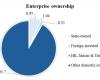
This article analyzes China’s Data IP experiment based on the “Three Types Separation” rule from the 2022 Data Twenty Measures. Three parallel registration systems run by the China National Intellectual Property Administration, the National Data Administration and the Ministry of Finance regulate data IP, data property rights, and data assets respectively. Pilot results and Zhejiang surveys reveal domestic private enterprises dominate registrations, mostly for internal data product development. Courts treat Data IP certificates as preliminary evidence under the Anti-Unfair Competition Law. Despite booming registration volume, institutional coordination and immature data trading markets remain challenges for the system.
QBPC, RDPAC and Distinct Foreign Voices in China’s IP System

The closure of the Quality Brands Protection Committee (QBPC) and the apparent absorption of the Research and Development Pharmaceutical Association Committee of China (RDPAC) into new institutional structures marks the end of an important chapter in the development of China’s modern intellectual property system. Founded during China’s WTO-accession era, both organizations played influential roles in fostering dialogue, advancing legal and regulatory reforms, and helping foreign and Chinese stakeholders identify areas of common interest. Drawing on examples ranging from anti-counterfeiting enforcement to pharmaceutical intellectual property reform, this article argues that their effectiveness often stemmed not from exerting pressure, but from aligning foreign experience with China’s evolving development priorities. Their disappearance reflects China’s transformation from a country primarily concerned with protecting foreign intellectual property into one with its own powerful innovation constituency. At the same time, it raises important questions about whether newer institutions can continue to represent concerns that uniquely affect foreign companies while preserving the technical exchanges, professional engagement, and practical cooperation that contributed to decades of intellectual property reform.
Measuring FRAND Value in ZTE v. Samsung
China’s recent global FRAND determination in ZTE v. Samsung has attracted attention because it valued ZTE’s SEP portfolio at nearly twice the level of a contemporaneous English court decision. This article argues that the more important issue is not the royalty rate itself, but the methodology used to measure technological contribution. The Chongqing court relied heavily on declared SEP-family shares, portfolio metrics, territorial weighting, and other quantitative indicators that are closely associated with longstanding Chinese innovation policies encouraging patent accumulation, standards participation, and portfolio expansion. By comparing the decision to earlier Chinese FRAND jurisprudence, the English Samsung decision, USPTO research, and broader debates over Chinese patent statistics, the article explores whether these metrics accurately measure technological contribution or instead reward portfolio scale and geographic concentration. The case may signal an important shift in Chinese FRAND adjudication from disputes over the meaning of FRAND to a deeper debate over how FRAND value itself should be measured.
Using and Misusing Chinese Patent Data

Patent statistics are frequently cited as evidence of China’s growing technological strength, but patent counts by themselves do not address qualitative concerns. Moreover, they often measure much more than innovation alone. They can reflect commercialization strategies, export orientation, government incentives, and differences in patent systems across countries. This article examines how patent data of various kinds can be used to assess China’s competitive position, while also highlighting the limitations of relying on patent counts alone. Drawing on recent U.S.-China filing data, design patent trends, overseas filing behavior, and common measures of patent quality, it argues that patent statistics are most useful when interpreted in context and alongside other indicators of technological and commercial performance.
Upcoming Senate Judiciary Hearing
was asked to testify before the Senate Judiciary Committee on April 22, 2026. The link is here: https://www.judiciary.senate.gov/committee-activity/hearings/stealth-stealing-chinas-ongoing-theft-of-us-innovation-04-22-2026.


