
Mark Cohen’s spring lecture agenda focuses on new developments in US-China IP relations, developments under Donald Trump, and practical aspects of licensing to or from China.
Navigating Innovation: How the Presidential Candidates Address Technology, IP, and the China Challenge
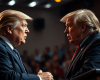
This article examines the candidates’ positions and accomplishments in four key areas implicating technological competition: derisking, negotiating, and advancing new trade policies, reorganizing government structures to promote competitiveness, and developing policies to address new technology issues. On the surface, the differences in approaches appear to focus primarily on matters of degree. Both parties support such tools as continued tariffs against Chinese imports, use of export controls and other trade sanctions, and enhanced efforts to “de-link” or “de-risk” from dependency on Chinese imports. Nonetheless, candidates Trump and Harris have sparred over the extent and impact of the tariffs, and the track records and rhetoric of the candidates suggest more differences than may initially be evident.
Fourth Annual Berkeley Tsinghua Program — June 13, 15 & 16

Berkeley and Tsinghua law schools will be presenting their fourth annual program on Transnational IP Litigation, with a focus on litigation and licensing, including licensing of copyright and designs on June 13, 15 & 16.
Forthcoming Book Talk on the Past and Future of Chinese IP
Berkeley Law will be hosting a book talk on the treatise, Intellectual Property Law in China (2d ed.) on September 23, 2021 at 5 PM Pacific Time. Registration is free. We will discuss the rapid evolution of China’s IP regime over the past 40 years as well as the likely directions that China’s IP regime will take place in the years ahead.
Patent Litigation, IP Monetization and Technology Decoupling: Lessons for the Future
Even during a time of trade conflict, there was considerable litigation and patent licensing activity with China, including a pronounced role in global markets for Chinese companies and in China for US companies. Patent disputes and licensing involved a diverse group of technologies. Chinese companies have become more active in SEP litigation overseas. The United States is an important venue for litigating overseas patent disputes with Chinese entities. Both the patent licensing and pharma data show the importance of tracking market value and trends to determine the real-world impact of IP-related policies.
The WTO IP Cases That Weren’t
Does the WTO / TRIPS Agreement still have teeth on IP? This blog explores the possible claims that could be made involving TRIPS Agreement violations and China. The more important claims are complex, data-dependent, and would require a whole of government approach by the Biden adminisitration.
Translation of Draft Patent Law Available
Thanks to He Jing of the Anjie Law Firm, attached please find an unofficial line-by-line translation of the recently released Patent Law Amendments 2nd reading. Comments are due August 16, 2020. Some highlights […]
Antitrust Aspects of “Unfairly High Patent Pricing” for Licensing Transactions in China
This guest blog has been written by Prof. HAO Yuan of Tsinghua University School of Law. China is facing a pressing need to build its innovation-driven economy. To facilitate key features of […]
Draft Civil Code Technology Contract Law Available for Comment
The NPC has released a draft of the contract chapter of the draft civil code for public comment. According to the NPC Observer, this is the second draft with the final round scheduled for consideration as early as March 2020. Comments are being accepted by the NPC through January 26, 2020. Chapter 20 of the […]
Foreign Investment Law Implementing Regs Open For Public Comment: Administrative and Punitive Enforcement Ascends Again
The Ministry of Justice had published a draft of the Foreign Investment Law Implementing Regulations for public comment. Chinalawtranslate has prepared an English translation of the proposed regulations and of the law […]

 China IPR - Intellectual Property Developments in China