
China appears to have taken a meaningful step toward complying with the WTO’s DS611 ruling by stepping back from its controversial use of anti-suit injunctions in SEP disputes, with no new ASIs reported since the decision and indications—primarily through WTO statements—that the Supreme People’s Court withdrew the policy. However, implementation remains incomplete. The underlying doctrine has not been clearly repudiated, key judicial materials remain difficult to locate, and earlier decisions continue to be inconsistently published, often in anonymized or unstable form. The WTO arbitrators’ expansive interpretation of “decisions of general application” raises additional concerns, as it extends TRIPS transparency obligations beyond formal precedent in ways that may not align with how Chinese courts actually develop policy. At the same time, the United States’ attempt to narrow transparency obligations was rightly rejected. With parallel developments in Europe and the UK, anti-suit injunctions are no longer uniquely Chinese, but part of a broader global struggle over jurisdiction in SEP disputes. China’s response reflects a cautious retreat rather than a full policy reversal, leaving important questions about transparency, judicial signaling, and future practice unresolved.
Navigating Innovation: How the Presidential Candidates Address Technology, IP, and the China Challenge
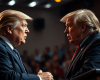
This article examines the candidates’ positions and accomplishments in four key areas implicating technological competition: derisking, negotiating, and advancing new trade policies, reorganizing government structures to promote competitiveness, and developing policies to address new technology issues. On the surface, the differences in approaches appear to focus primarily on matters of degree. Both parties support such tools as continued tariffs against Chinese imports, use of export controls and other trade sanctions, and enhanced efforts to “de-link” or “de-risk” from dependency on Chinese imports. Nonetheless, candidates Trump and Harris have sparred over the extent and impact of the tariffs, and the track records and rhetoric of the candidates suggest more differences than may initially be evident.
Australia, US, and EU Submissions at the WTO on China and Anti-Suit Injunctions
By assembling the briefs submitted by the EU, Australia and the United States in the WTO case DS611, a stark difference in approach emerges between the United States and the EU/Australia. It appears that the United States is allying itself more closely with China, perhaps with a goal of limiting WTO jurisdiction in certain areas. At the same time, however, the United States appears to be retreating on its long-held commitments to increasing transparency in China’s judicial and legal system.
USTR, IP and US-China Trade
On October 4 2021, USTR Katherine Tai delivered her much-awaited speech at CSIS outlining US-China trade policy under the Biden Administration. The speech summarizes her “top to bottom” review of US-China trade policy. Sadly, it was one of the most IP-free speeches that we have heard from USTR on China trade policies. USTR Tai mentioned intellectual property only once when she briefly talked about the Phase 1 Agreement. An Administration orientation towards increasing market access for grains and goods, but not protection and commercialization of intangible rights, could have long-term adverse consequences.
What the 301 Report Says About Future Relations on IP with China
USTR released its Special 301 Report (the “Report”) on April 30, 2021. The China except is attached here. The Report addresses a wider range of IP issues than in many prior years. […]
The NTE Report On Chinese IP And Its Relationships To Chinese Legal Developments

USTR’s recently released NTE report shows continuing lack of clarity over key Chinese legal terms. The report also declines to discuss commercial rule of law issues raised in last years Special 301 report. What role does commercial rule of law have in the Biden Administration’s trade diplomacy? The answer is unclear.
USTR and Restructuring China IP Policy
What are the priorities for USTR in engaging China on IP issues? Will USTR reach out to other agencies to build an informed and efficient process to bear on Chinese and IP and tech issues? There are many built-in impediments in the US government structures to making that reality possible.
The WTO IP Cases That Weren’t
Does the WTO / TRIPS Agreement still have teeth on IP? This blog explores the possible claims that could be made involving TRIPS Agreement violations and China. The more important claims are complex, data-dependent, and would require a whole of government approach by the Biden adminisitration.
Trade Wars: A New Beginning?
Why is this year’s Special 301 Report (the “Report”) from USTR (April 29, 2019) different from prior reports? In prior years, this report often repeated materials found elsewhere, such as in the […]
The Trump Administration and China IP Diplomacy: Old Wine In a New Bottle?
Two major China IP events occurred in late November and December. One of them was the long-awaited first phase of a settlement of the US-China trade war. The second was the nomination […]

 China IPR - Intellectual Property Developments in China