I will be a discussant on the recent WTO arbitral decision in DS/611 before a virtual meeting Friends of the Multilateralism Group (FMG). The FMG brings together WTO Ambassadors (past and present), retirees […]

I will be a discussant on the recent WTO arbitral decision in DS/611 before a virtual meeting Friends of the Multilateralism Group (FMG). The FMG brings together WTO Ambassadors (past and present), retirees […]
The WTO recently released its decision in DS 611, the IP enforcement case involving China’s SEP practices and transparency of China’s judicial decision making. The case makes some progress on China’s important transparency obligations.
Three major court decisions involving SEPS, patents and foreign companies have been recently decided in China. In addition, the EU has recently released two of its submissions to the WTO regarding its dispute with China on antisuit injunctions. Nokia has also announced a global settlement with Oppo. What does the future hold for SEP litigation in China and the WTO dispute?
By assembling the briefs submitted by the EU, Australia and the United States in the WTO case DS611, a stark difference in approach emerges between the United States and the EU/Australia. It appears that the United States is allying itself more closely with China, perhaps with a goal of limiting WTO jurisdiction in certain areas. At the same time, however, the United States appears to be retreating on its long-held commitments to increasing transparency in China’s judicial and legal system.

How should one understand the overlapping rules enacted by SAMR on IP, SEPS and antitrust? Is a new wave of legislation under way? Is China planning on ramping up antitrust enforcement in SEPs? What do these legislative experiments portend in terms of China’s commitments to rule of law and the challenges faced by high tech companies – whether implementer or licensor in China?
China’s judicial database is a valuable tool to understanding China’s legal regime for intellectual property. However, a significant cohort of cases are unpublished. This article written by me and published by the Hinrich Foundation, discusses how to use this and other databases effectively, while at the same time recognizing that there may be limits to their overall comprehensiveness.
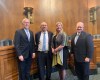
Over the course of the last three months, I spoke at a trifecta of Congressional hearings: the House Judiciary Committee, the Senate Judiciary Committee, and the Congressional US-China Economic and Security Review Commission. Before I had testified I was pessimistic about the prospects for positive IP-related legislation in our national competitive interests. I am now mildly optimistic that Congress can pass necessary IP legislation if both parties in Congress and the Administration work together.
The United States, Japan, and Canada have now asked to join the EU consultation request with China at the WTO regarding Chinese practices in issuing anti-suit injunctions (“ASIs”) for standards-essential patents (SEPs). […]
On February 18, 2022, the EU filed a request for consultations at the WTO regarding China’s SEP practices as well as China’s failure to respond to the prior Article 63 transparency request […]
Translations and comments are made available on patent and trademark examination guidelines, Seed Law, Plant Variety JI, AUCL JI, and Oppo v Sharp. With regard to the SPC decision in Oppo v Sharp a question is raised concerning China’s efforts to regulate and take jurisdiction over global SEP royalty rate setting.

Mark Allen Cohen (柯恒} is a Distinguished Senior Fellow, Director and Lecturer of the Asia IP Project at the Berkeley Center for Law and Technology at the University of California, Berkeley. In total, he has nearly 40 years of private sector, public sector, etc., in-house and academic experience on IPR issues in China, including numerous publications and awards. This is his private blog.
 China IPR - Intellectual Property Developments in China