
Why does China increasingly treat intellectual property as a strategic instrument of national development, international influence, and global governance while the United States often continues to view it primarily through the lens of enforcement and compliance? Building on my recent article with former USPTO Director David Kappos in The National Interest, this essay argues that intellectual property should be viewed as a central issue of foreign policy rather than as a specialized area of law. Recent Chinese writings emphasize the development of an indigenous intellectual property knowledge system and greater international “discourse power,” while U.S. policy remains focused on criminal enforcement campaigns and “IP theft.” If the United States wishes to preserve a market-oriented international intellectual property system, it must modernize its own laws, renew engagement with China’s civil IP institutions, emphasize transparency and private rights, and recognize that competition increasingly extends to the institutions, concepts, and norms that will govern the future of innovation.
Data as Intellectual Property: China’s Experiment
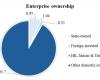
This article analyzes China’s Data IP experiment based on the “Three Types Separation” rule from the 2022 Data Twenty Measures. Three parallel registration systems run by the China National Intellectual Property Administration, the National Data Administration and the Ministry of Finance regulate data IP, data property rights, and data assets respectively. Pilot results and Zhejiang surveys reveal domestic private enterprises dominate registrations, mostly for internal data product development. Courts treat Data IP certificates as preliminary evidence under the Anti-Unfair Competition Law. Despite booming registration volume, institutional coordination and immature data trading markets remain challenges for the system.


