
A guest blog by Professor Can Huang (黄灿), Ms. Meiyan Fan (樊梅妍) and Ms. Xinyi Song (宋昕怡) at the School of Management, Zhejiang University and Zhejiang Provincial Research Center for Data Intellectual Property.
According to the National Survey Report on Data Resources (2025), China’s economy generated 52.26 zettabytes (ZB) of data in 2025, a 27.3% increase year-on-year and accounting for approximately 27.4% of global data production. Per-capita data generation reached 39.93 terabytes, while enterprises accounted for roughly 90% of the annual data growth. Demand from artificial intelligence (AI) is a particularly powerful driver of data value creation—data used for AI training and inference reached 199.48 exabytes, up 42.9%, and the number of high-quality datasets surpassed 110,000, up 61.1%, with total volume more than doubling to over 908 petabytes.[i] These figures gain further significance when set against the global backdrop. According to the International Data Corporation, in its 2018 “Data Age 2025” white paper, China’s datasphere was projected to grow to 48.6 zettabytes by 2025, making it the world’s largest national datasphere at 27.8 percent of the global total.[ii]
Given the importance of data for digital economy and development of emerging technologies such as AI, the Chinese government has initiated policy experiments to establish an overarching institutional framework to regulate data as one of the production factors along with land, capital, labor and technology. One of the most important policy documents in this regard was the Opinions of the Central Committee of the Communist Party of China and the State Council on Constructing a Basic System for Data and Putting Data Factors to Better Use (known as the “Data Twenty Measures” or 数据二十条) which was announced in 2022. Rather than assigning exclusive data ownership, the policy document separates data-related rights into three types: the right to hold data resources (数据资源持有权), the right to process and use data (数据加工使用权), and the right to operate or commercialize data products and services (数据产品经营权). The principle of “three types separation” articulated in this document was adopted in the following important policies which together constitute the data institutional framework.
Guided by the “Data Twenty Measures”, China has begun to establish three registration systems to register data-related rights: a data IP registration system administered by the China National Intellectual Property Administration (CNIPA), a broader data property rights registration system promoted by the National Data Administration (NDA), and a data asset accounting system overseen by the Ministry of Finance.
Among these three systems, Data IP occupies a distinctive position. Unlike data property rights registration, which allows registration of raw and processed data, or data asset accounting, which concerns financial recognition and reporting, Data IP is intended to recognize processed data products that have been lawfully acquired, processed by algorithm, and shown to embody both commercial value and intellectual input. Rather than conferring ownership of raw data, it functions as a quasi-proprietary, evidentiary mechanism for processed datasets.
The Data IP System: From Principles to Pilots
In September 2021, the Central Committee of the Communist Party of China and the State Council issued the Outline for Building a Powerful Intellectual Property Country (2021–2035), which formally brought data within China’s national intellectual property strategy. The Outline identified the development of rules for protecting data IP as a priority within the IP framework for emerging technologies and new business models. At the time, however, a dedicated Data IP framework had yet to take shape and remains at an exploratory stage.
In October 2021, the State Council released the 14th Five-Year Plan for National Intellectual Property Protection and Utilization. The Plan outlined several priorities, including exploring legislation on data IP, establishing a tiered regulatory framework, examining relevant international practices, and supporting qualified regions in launching pilot programs. These measures translated the broader policy vision into concrete steps for administrative experimentation.
The process is not significantly different from other legislative experiments in new and emerging technologies that China has launched over the years as it includes both national and local experiments, research, and considerations of national economic, industrial and other policies.
The Regional Data IP Registration System
CNIPA launched its regional Data IP pilot program in November 2022. The program now covers 17 provinces and municipalities, including Beijing, Shanghai, Jiangsu, Zhejiang, Guangdong, and Fujian. Guided by CNIPA, the IP administrations in these regions and municipalities established their own data IP registration systems and procedures which are however similar to each other. By the end of 2025, the pilot regions had received more than 100,000 Data IP registration applications and issued over 48,000 certificates,[iii] spanning 87 sectors of the national economy.[iv] These registrations have also supported more than RMB 15 billion in financing and licensing transactions across the pilot regions,[v] demonstrating the growing commercial value of the Data IP system.
Zhejiang Province, one of the most active pilot regions, evaluates data IP applications against four substantive criteria: lawful collection, including compliance with the Data Security Law, the Cybersecurity Law, and the Personal Information Protection Law; algorithmic processing, meaning that the data has been cleaned, anonymized, or otherwise computationally transformed rather than merely aggregated; practical value for decision-making, market analysis, or R&D; and intellectual effort, reflected in the creative organization or curation of data beyond its mere assembly.
These criteria are similar to the originality requirement in copyright law in that they emphasize intellectual input and value-added processing. At the same time, the requirements for lawful collection are rooted in China’s broader data governance framework. Rather than replicating any existing form of IP protection, the scheme draws on concepts from several areas of law while avoiding the formal constraints associated with traditional IP rights.
By April 2026, Zhejiang alone had received more than 80,000 Data IP registration applications and issued over 31,000 certificates. The province had also recorded more than RMB 14.5 billion in transactions, licensing, and financing linked to registered Data IP.[vi] Although these figures come from a coastal province with one of China’s most developed digital economies, they suggest that the registration system is being used for genuine commercial transactions rather than merely as a legal or evidentiary safeguard.
The rapid uptake of Data IP registration in Zhejiang also clarifies the institutional function of the certificates. It creates a documentary basis on which firms can present processed datasets as identifiable and legally compliant assets. Administrative uptake, however, is only part of the picture. Whether courts are willing to give these certificates evidentiary weight in actual disputes is a separate question — and one on which the pilot program has already produced meaningful signals.
Early Litigation: How the Certificates Are Being Used
The Chinese courts have adopted a pragmatic approach towards data IP: rather than treating registration as creating a new proprietary right, courts regard the certificate primarily as prima facie evidence of the lawful origin and legitimate control of a dataset.
This approach was illustrated in the DataTang case (DataTang (Beijing) Technology v. Yinmu (Shanghai) Technology), one of the earliest appellate decisions involving registered Data IP. The dispute arose after the defendant reproduced and publicly displayed approximately 200 hours of the plaintiff’s registered 1,505-hour speech corpus on its website to attract users. Because Chinese law does not yet provide a dedicated cause of action for Data IP infringement, the Beijing Internet Court at first instance attempted to resolve the dispute under Article 9 of the Anti-Unfair Competition Law (AUCL), the provision governing trade secrets. The Beijing Intellectual Property Court corrected that reasoning on appeal. It held that the 200-hour dataset had already been made publicly available under a Creative Commons non-commercial license and therefore lacked the secrecy required for trade secret protection under Article 9. The court emphasized that the defendant had violated the non-commercial terms of the open-data license and had appropriated the plaintiff’s competitive resources for its own platform advantage. On that basis, the court characterized the conduct as unfair competition under Article 2 of the AUCL, the statute’s general clause, and upheld an award of RMB 100,000 in damages under Article 17. In this case, the courts treated the Data IP certificate as prima facie evidence of the dataset’s lawful provenance and the plaintiff’s legitimate interests in the processed data product and awarded RMB 100,000 in damages.
A similar evidentiary logic appeared in the Taobao-Taoshu dispute. The defendant had systematically extracted and commercialized proprietary business analytics data generated through Alibaba’s Business Advisor platform. Although the Nanjing Intermediate People’s Court grounded liability in trade secret law and unfair competition, it again treated the Data IP certificate as important evidence of the lawful source and legitimate holding of the data products. Finding deliberate and serious misconduct, the court awarded the plaintiffs the full RMB 30 million claimed, including punitive damages.
Taken together, these decisions indicate that Data IP registration currently functions primarily as a procedural and evidentiary mechanism rather than an independent exclusive property right. Registration can reduce a plaintiff’s burden of proving lawful acquisition, processing, and control, while substantive protection continues to be provided through existing doctrines, particularly the AUCL and trade secret law. This reliance on established doctrines also reveals judicial caution: courts have protected data interests without recognizing a novel property right absent explicit statutory authorization.
The Data Property Rights Registration System
Alongside CNIPA’s Data IP pilot program, a second, partially overlapping institutional framework has emerged under the National Data Administration (NDA), which was established on October 25, 2023, within the National Development and Reform Commission. Unlike CNIPA, whose role focuses on Data IP registration, the NDA has a much broader remit. It is responsible for coordinating China’s data ecosystem, including data integration, sharing, development, utilization, and the implementation of the Digital China strategy.
In April 2026, the NDA released the Guidelines for Data Property Right Registration (Trial), bringing the “three-types separation” framework into operation at the national level. The Guidelines allow the rightsholder to hold data resources, process and use data, and commercialize data products to be registered separately, recognizing that these rights may belong to different parties. Registration authorities are nominated by provincial governments and approved at the national level and may include both public institutions and enterprises. The national registration platform is designed to support a “register once, use nationwide” model, thereby reducing the fragmentation that has complicated cross-regional data transactions under the earlier pilot programs.
Regional pilots under the NDA framework are now underway in Xiamen in Fujian province and Hangzhou in Zhejiang province. By February 2026, Xiamen had issued 83 data property rights registration certificates, attracted more than 30 professional service providers offering services such as compliance certification and asset valuation, and supported the listing and trading of nearly 200 data products with a combined transaction value of more than RMB 10 million.[vii] In Hangzhou, the Hangzhou Data Exchange had issued more than 300 certificates by April 2026, covering industries including manufacturing, healthcare, financial services, transportation, and emerging fields such as embodied intelligence.[viii]
Although these figures remain modest relative to the size of China’s data economy, they are notable for experimental or pilot programs that are still in their early stages. More importantly, they show that a professional services ecosystem is beginning to emerge around data rights, including valuation firms, compliance service providers, brokers, and data exchanges.
The Data Asset Accounting System
A separate initiative led by the Ministry of Finance (MoF) focuses on treating data as an asset for financial reporting purposes. In 2025, MoF launched a pilot program for the whole-process management of data assets, involving several central ministries, major state-owned enterprises, and 16 provincial and municipal governments.
The pilot focuses on five areas: compiling inventories of data assets, establishing data asset registration systems, improving mechanisms for authorized data operation, refining revenue-sharing mechanisms, and standardizing transaction and circulation procedures. The initiative is closely tied to ongoing accounting reforms, particularly the possible recognition of data assets on corporate balance sheets, with potentially significant implications for enterprise valuation, financing, and mergers and acquisitions.
MoF’s initiative is closely connected to the Data IP and data property rights registration systems. A Data IP certificate or a data rights registration record may help support the recognition of data assets by providing evidence of provenance and a basis for valuation. Together, these initiatives are intended to create a coherent framework that links registration, rights protection, and the accounting recognition of data assets. How well this framework works in practice will depend on effective coordination across multiple regulatory frameworks.
Use and Value of Data IP: Evidence from Zhejiang Provincial Survey on Data IP
The most granular empirical evidence on how Data IP is being used comes from two surveys conducted by the Zhejiang Provincial Research Center for Data IP in Zhejiang University (where the authors are affiliated) and the Zhejiang Intellectual Property Research and Service Center which is affiliated with the Zhejiang Provincial IP Administration. The surveys covered Data IP successfully registered in Zhejiang Province in 2024, with 823 valid responses from the May 2023–April 2024 cohort, and in 2025, with 1,049 valid respondents from the January–November 2025 cohort. Both surveys used stratified random samples across 20 industry categories and 11 prefecture-level administrative divisions. Response rates were 95.7 % and 93.2 %, high enough to treat the findings as reasonably representative.
The 2025 Zhejiang survey shows that data IP registration is dominated by enterprises, which account for 91.9% of all registrants. Among enterprise registrants, domestic companies make up the overwhelming majority, with non-state-owned-enterprises accounting for 91.7% and state-owned enterprises for 6.95%, while foreign-invested and Hong Kong, Macao, and Taiwan-invested enterprises participate only marginally. This pattern may be closely related to the registration requirements under Zhejiang’s pilot system: data IP registration generally presupposes that the data has identifiable commercial application scenarios and practical value, which fits more naturally with firms’ profit-oriented incentives and routine business operations. By contrast, individuals and public institutions may be less likely to possess productized datasets or strong incentives to register them. The very small share of foreign-related enterprises may also reflect additional concerns over cross-border data regulation and compliance review, rather than merely a lack of market awareness.
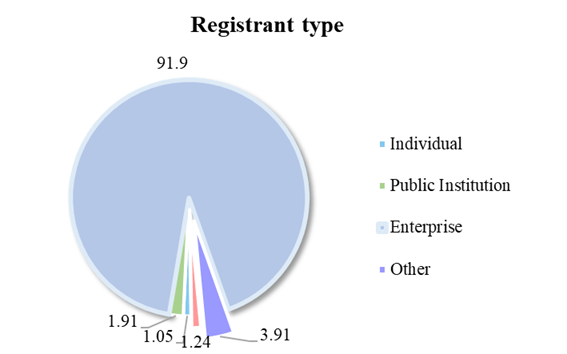
Figure 1. Types of Data IP Registrants in 2025 Zhejiang Data IP Survey
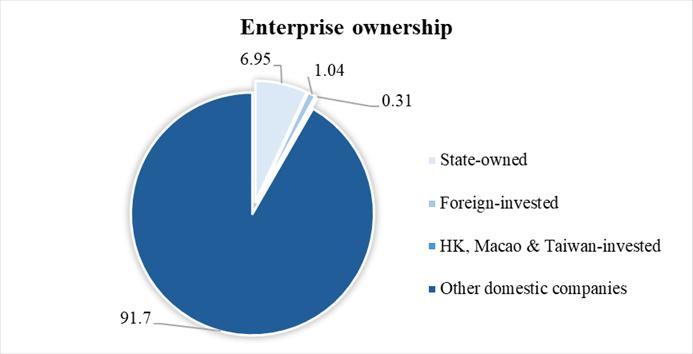
Figure 2. Ownership Structure of Enterprise Registrants in 2025 Zhejiang Data IP Survey
According to the 2025 Zhejiang survey, which reflects the industry composition of registered data IP through stratified sampling by industry and region, most applications came from three sectors: software and information technology services, wholesale and retail, and manufacturing. Other industries, including agriculture, scientific research, health and social work, transportation, construction, finance, education, and culture and entertainment, accounted for much smaller shares. This pattern is understandable. Data IP registration is likely to advance first in sectors where data are generated at scale, routinely processed for business use, and connected to clearer application scenarios. Software firms often have stronger capabilities to structure and package data products; wholesale and retail firms accumulate transactions, consumer, and supply-chain data; and manufacturing firms increasingly generate industrial and process data through digital transformation.
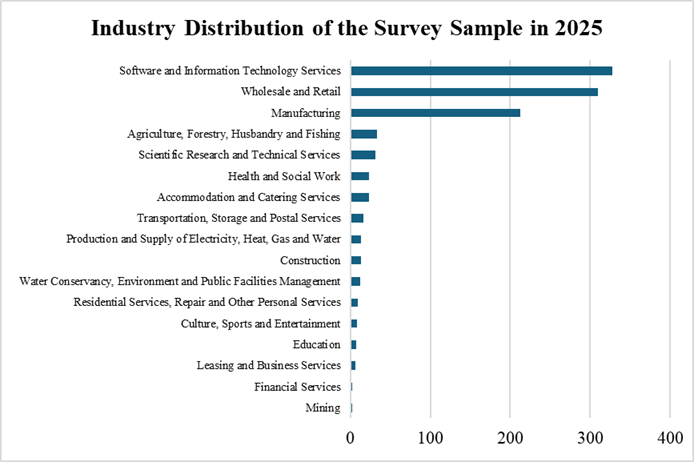
Figure 3. Industry Distribution of Respondents in 2025 Zhejiang Data IP Survey
On registration motivations, the data suggests that applicants are mainly driven by three concerns: developing data products or establishing product standards, strengthening corporate reputation, and preventing imitation or misappropriation. These motives are largely market-oriented but not necessarily centered on immediate commercialization. Rather, they point to a broader set of strategic uses: using registration to formalize data products, signal credibility to external stakeholders, and creating a degree of defensive protection around data-based assets. In this sense, data IP registration appears to function not only as a legal protection mechanism, but also as an institutional tool for product development, reputation building, and meeting policy or business requirements.
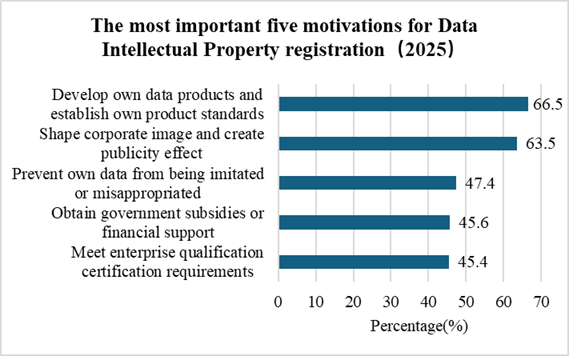
Figure 4. Top Five Motivations for Data IP Registration (2025)
On valuation, the 2025 survey asked registrants: “On the day you obtained the data IP certificate, assuming you had all the knowledge you possess today, for what amount would you be willing to sell your data IP?” The answers show a clearly right-skewed distribution. More than half of the reported valuations were below RMB 100,000, with the largest single group falling in the RMB 50,000–100,000 range; nearly four-fifths were below RMB 500,000. At the same time, the distribution does not collapse into uniformly low values: a smaller but visible upper tail remains, including registrants valuing their data IP above RMB 5 million and even above RMB 30 million. This pattern suggests a long-tail structure: most registered data IP assets are modestly valued, while a limited number may carry substantial commercial potential.
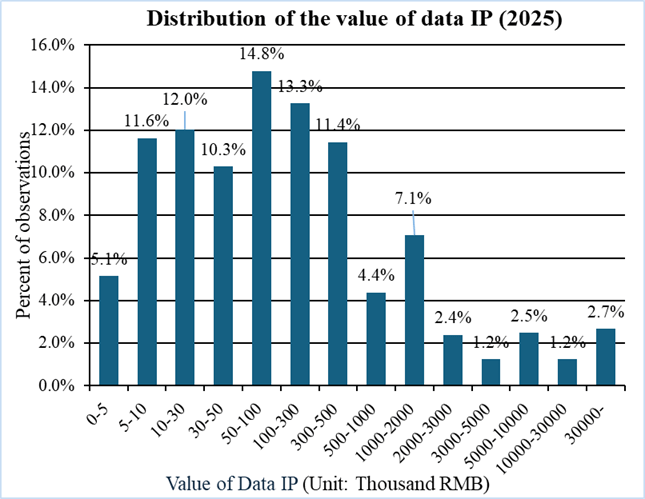
Figure 5. Distribution of Data IP Value in 2025 Zhejiang Data IP Survey
Annual sales revenue from data IP-related products and services offers a more concrete view of the economic activities surrounding registered data IP. In the 2025 Zhejiang Provincial Survey on Data IP, the average reported revenue per registered data IP in 2024 was RMB 4.54 million. Extrapolating this figure to the 11,713 registered data IP registered in Zhejiang province yields an estimated total revenue of RMB 53.19 billion, with a 95% confidence interval ranging from RMB 41.37 billion to RMB 65.01 billion. This estimate should be interpreted with caution: the reported revenue is associated with data IP-related products and services, but it cannot be attributed solely to the registered data IP itself, since other inputs such as technology, labor, customer relationships, and market channels also contribute to sales. Even so, the scale of the estimate suggests that registered data IP in Zhejiang province is often embedded in real commercial activity, rather than existing only as a formal certificate or symbolic institutional label.
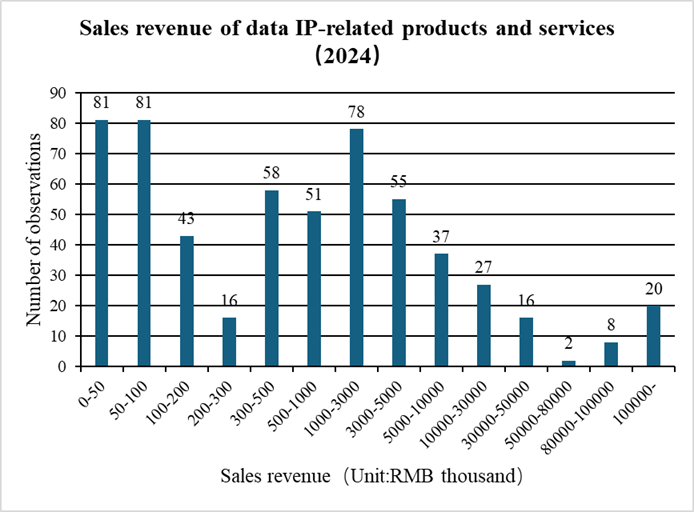
Figure 6. Distribution of Revenue from Data IP-Related Product and Service Sales
On commercialization, 16.3 % of the 2025 sample, or 171 out of 1,049 respondents, had engaged in some form of commercialization or transaction activity involving Data IP. The dominant form was self-development of products or services, followed by balance-sheet recognition as a data asset, entrepreneurial activity, licensing, credit-enhanced financing, and combined transfer-and-licensing arrangements. By contrast, more complex or market-dependent mechanisms, such as cross-border circulation, securitization, and trust structures remained marginal. This distribution confirms that Data IP is still used mainly internally, as an input to a firm’s own products rather than as a freely traded or licensed asset.
Table 1. Commercialization and Transaction Activities of Data IP in 2025 Zhejiang Data IP Survey
| Commercialization or Transaction Activity | Proportion |
| Self-developed products or services based on Data IP | 75.4% |
| Data asset recognition (on-balance sheet) | 19.3% |
| Entrepreneurial activities based on Data IP | 17.0% |
| Licensing | 15.2% |
| Credit enhancement financing | 14.6% |
| Combined transfer and licensing | 14.0% |
| Sharing within an alliance | 9.4% |
| Transfer | 7.6% |
| Capital contribution in kind (valuation-based investment) | 7.0% |
| Insurance | 4.7% |
| Cross-border circulation | 3.5% |
| Trust | 2.9% |
| Securitization | 1.8% |
| Others | 15.8% |
Conclusions and Open Questions
China’s Data IP experiment is no longer just a policy slogan. The combination of growing registration numbers, emerging litigation outcomes, survey evidence, and sustained institutional investment suggests that the system is already being used in practice and is beginning to produce legal and commercial consequences. One particularly important development is the way courts have treated Data IP certificates as prima facie evidence of lawful data provenance and legitimate control over data products. This does not mean that China has fully resolved the status of data rights, but it does mean that registration can matter in disputes: even before a comprehensive legislative framework is in place, the certificate can help right holders organize evidence, support claims, and reduce uncertainty in enforcement.
This practical progress, however, also reveals the limits of the current framework. At present, much of the enforcement still relies on the Anti-Unfair Competition Law. That approach is useful in the early stage because it allows courts to protect data-related interests without creating a fully new property right. But as data transactions become more frequent and rights arrangements more complex, this provisional route may prove insufficient. Similar uncertainty exists at the institutional level. The relationship between the CNIPA Data IP registration system and the National Data Administration’s data rights framework has not yet been fully clarified. The accounting side also remains fragile: data asset recognition depends on valuation methods that are still developing, and if transaction markets remain thin, excessive reliance on registered or self-reported values could create risks of inflated or unstable balance-sheet treatment.
The Zhejiang Provincial Survey on Data IP helps show where the system currently stands. Firms register data IP mainly to support data product development, establish product standards, enhance reputation, and protect commercially valuable datasets. Direct market transactions—such as licensing, transfer, and financing—are present but still limited. Commercialization is dominated by internal use, especially the integration of registered data into firms’ own products and services. This suggests that, at the current stage, data IP registration functions less as a mechanism for creating a liquid market in standalone data assets and more as institutional infrastructure. It helps firms identify, document, govern, and legitimize data resources that are already connected to business operations.
Whether this infrastructure can evolve into a more active data market remains an open question. Much will depend on whether different registration systems become interoperable, whether valuation standards become more reliable, and whether a professional ecosystem of brokers, certifiers, valuators, transaction platforms, and legal service providers develops sufficient credibility.
Even with these uncertainties, the direction of development is clear. China has moved beyond the abstract claim that data should be treated as a factor of production. It is building, testing, and refining a working infrastructure for registration, rights recognition, valuation, commercialization, and enforcement. The pace of institutional development—from the 2022 policy principles to the 2026 national registration guidelines and China’s growing international presence—is rapid. For foreign companies operating in China’s data economy, practitioners advising on data transactions, and policymakers tracking the global governance of data, this experiment deserves close attention. It may not produce a model that can be easily transplanted into other legal systems, but it is already generating valuable evidence on what happens when a major jurisdiction tries systematically to turn data into a protected, registrable, and commercially usable asset. China’s experiment may be useful for other data-rich economies, such as the European Union and United States to review to see if it can also enable their own economies to better monetize and protect data rights in accordance with their own systems.
[i] https://www.nda.gov.cn/sjj/swdt/xwfb/0429/20260429164803571173880_pc.html
[ii] https://www.seagate.com/files/www-content/our-story/trends/files/idc-seagate-dataage-whitepaper.pdf
[iii] https://www.workercn.cn/papers/grrb/2026/04/21/4/news-5.html
[iv] https://www.stdaily.com/web/gdxw/2026-04/23/content_507038.html
[v] https://www.gov.cn/lianbo/fabu/202601/content_7059433.htm
[vi] https://ziip.org.cn:4443/Portal/CommonView.aspx?ArticleID=2334&CategoryId=4
[vii] https://fgw.fj.gov.cn/ztzl/szfjzt/sxdt/202604/t20260401_7118114.htm
[viii]https://mp.weixin.qq.com/s?__biz=MzI2MDYxMzUxMg==&chksm=eb6689ec9761a824bfea7ce18d9061c62ec30a5fc4c2da58841fa8ea0913f255e387f259625&idx=1&mid=2247627375&sn=a5275172d596757052c11b3698716e55
Closing Comment: Since I first co-moderated a discussion with Prof. Can at the 4th Conference on Global Innovation and Intellectual Property at the Guanghua School of Management, Peking University on “Data as Intellectual Property” (May 16, 2026), I have had the opportunity to discuss these developments with both Chinese and U.S. academics and officials. The topic was also a part of the U.S.-China IP Experts Dialogue, which recently convened at Renmin University in Beijing from July 13 – 16, 2026. The ongoing experiments in this area are worth continual observation and engagement. I hope that you will also agree! Mark Cohen
Categories: CNIPA, Data Rights


