
The Quality Brands Protection Committee (QBPC) has ceased operations after more than twenty-five years of service. Its closure, reported in the June 16, 2026 issue of World Trademark Review, marks the end of one of the most influential foreign business organizations in the development of China’s modern intellectual property system. Former QBPC member companies have reportedly joined the China Anti-Infringement and Anti-Counterfeiting Innovation Strategic Alliance (CAASA).
Founded in 2000 under the China Association of Enterprises with Foreign Investment (CAEFI), a Ministry of Commerce-affiliated organization representing foreign-invested enterprises in China, QBPC emerged during a very different period in China’s development. Foreign companies were among the principal advocates for stronger intellectual property protection in China. Through annual conferences, training programs, legislative recommendations, policy dialogues, and recognition of exemplary enforcement cases, QBPC helped create channels of communication between foreign rights holders and Chinese authorities at a time when few such mechanisms existed. As one attorney noted at the annual Fordham International IP Conference in 2022 “QBPC is arguably the most active, the most influential IP association in China.”
A sister organization, the Research and Development Pharmaceutical Association Committee of China (RDPAC), which represented many of the world’s leading research-based pharmaceutical companies operating in China, has also ceased operations as an independent organization. RDPAC’s official WeChat account states that “This account has ceased operations” as of October 29, 2025. Its functions appear to have been absorbed into a new Medical Care and Health Industry Working Committee established through the restructuring of healthcare-related committees within CAEFI. Founded in 1999, RDPAC played a similarly influential role in pharmaceutical policy discussions and industry self-governance.
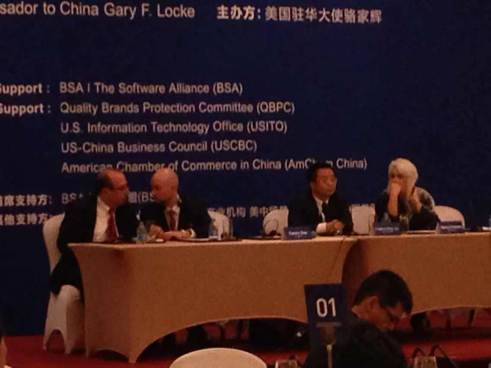
The demise of QBPC and RDPAC warrants reflection on what these organizations accomplished and what their passing may signify for China’s intellectual property system. My appreciation of QBPC’s role was reinforced by experiences such as the ABRO matter, which I discussed previously on this blog. ABRO presented a complex transnational challenge involving British and U.S. law enforcement, the Canton Trade Fair, and persistent difficulties in mobilizing local enforcement resources in China against a notorious counterfeiter who had also managed an effective public relations campaign. I was able to work with QBPC to ensure that Chinese officials and other stakeholders had access to a more accurate understanding of the dispute. As Jack Chang (Zhang Wei’an), of QBPC noted “Without your telling me the ABRO story in the old days, QBPC might have rejected ABRO’s application to join QBPC and the Chinese colleagues might turn their anger to the USG.” The episode demonstrated the importance of institutions that could bring together foreign companies, Chinese authorities, industry associations, and other stakeholders. Over the years, I organized numerous conferences in which QBPC representatives participated as speakers, and I worked closely with QBPC on a variety of intellectual property programs, such as US Ambassador’s roundtables (see picture below with other IP Attaches).
The pharmaceutical sector provides another example. My recent research on pharmaceutical intellectual property reforms in China suggests that major developments such as patent linkage, patent term adjustment, and evolving approaches to regulatory data protection were influenced not only by bilateral trade pressure but also by years of engagement involving Chinese and foreign stakeholders. Organizations such as RDPAC, together with groups including PhRMA, BIO, Interpat, the U.S. Patent and Trademark Office, the European Patent Office, and their Chinese counterparts, helped create fora where policymakers, regulators, academics, and industry representatives could exchange ideas and compare regulatory approaches. These efforts rarely generated headlines, and their impact is difficult to quantify. Yet they played an important role in building understanding, shaping reform proposals, and aligning intellectual property reforms with China’s own emerging innovation objectives.
Another factor in the effectiveness of organizations such as QBPC and RDPAC was their ability to align their recommendations with evolving Chinese policy priorities. Over time, they increasingly framed their proposals in ways that supported China’s own development objectives. RDPAC’s advocacy often intersected with initiatives such as Healthy China, pharmaceutical regulatory modernization, and the development of an innovative domestic biopharmaceutical sector. QBPC likewise connected stronger enforcement including the initially delicate task of encouraging law enforcement to take a more active role in dealing with criminal activity. Their effectiveness frequently stemmed from identifying areas where foreign experience and Chinese policy objectives converged.
Any account of QBPC’s history would be incomplete without recognizing the many individuals who helped build and sustain it over a quarter century. Leaders such as Joe Simone, Jack Chang, Ding Yu, Hu Xuemei, and many others devoted enormous energy to strengthening cooperation between rights holders and Chinese institutions. Many believed that progress in intellectual property protection was best achieved through sustained engagement, technical expertise, institution-building, and mutual understanding.
The disappearance of QBPC represents the loss of an institution that contributed significantly to the development of China’s modern intellectual property system. It also represents the loss of a platform through which foreign companies could collectively engage Chinese enforcement authorities on practical concerns.
The end of QBPC and RDPAC may also reflect a broader transformation in China’s innovation ecosystem. Both organizations emerged during China’s WTO-accession era, when foreign companies were not only major rights holders but were also viewed as important sources of investment, technology, management expertise, and international best practices. China today occupies a very different position. It is home to many of the world’s largest patent holders, technology companies, pharmaceutical innovators, e-commerce platforms, and consumer brands. Chinese companies increasingly confront the same intellectual property challenges that once primarily concerned foreign firms.
As China’s innovation system has matured, the distinction between foreign and domestic interests in intellectual property has narrowed. Strong intellectual property protection increasingly serves both constituencies. The growing role of CAASA reflects this evolution. CAASA’s membership includes both Chinese and foreign companies. Unlike QBPC, which principally represented foreign-invested enterprises, CAASA brings together Chinese and foreign companies, government agencies, enforcement authorities, research institutions, and industry groups within a more integrated framework.
At the same time, it would be premature to conclude that foreign companies no longer face distinctive concerns within China’s legal and regulatory system. Foreign-related litigation continues to operate under different procedural deadlines, while questions involving standards development, government support programs, data regulation, procurement practices, market access, and industrial policy can affect foreign and domestic companies differently in practice. China’s trade secret enforcement rules, for example, only recently removed requirements that they are only available to citizens. Moreover, formal equality does not always eliminate differences in practical experience or treatment. Organizations such as QBPC historically provided a valuable channel through which foreign companies could collectively engage with Chinese authorities and communicate shared concerns.
The demise of QBPC and RDPAC represents both the end of a distinct chapter in China’s intellectual property development and a sign of how much China’s innovation system has changed. Their rise reflected the period after WTO accession when foreign companies occupied a unique position in shaping discussions about intellectual property protection and institution-building. Foreign participation was encouraged as China sought to attract investment, technology, and expertise while modernizing its intellectual property system. Today, many of the same interests that QBPC and RDPAC once championed are shared by China’s own innovators.
The disappearance of dedicated foreign-industry organizations may reflect the maturation of China’s innovation ecosystem, but it also carries a risk: issues affecting foreign participants may become less visible within increasingly integrated institutions. The ultimate measure of their success may therefore be whether organizations such as CAASA can successfully represent a plurality of interests, including concerns that uniquely affect foreign companies, while maintaining the broad-based cooperation that China’s evolving innovation system increasingly requires.
The experience of QBPC and RDPAC also offers a broader lesson about engagement. At times, the proliferation in prior decades of bilateral mechanisms risked creating process without purpose and consuming resources without producing commensurate results. Yet the opposite extreme, allowing channels of communication to disappear altogether, potentially carries larger costs. The challenge is not whether to engage, but how to engage effectively. As the United States and China explore renewed avenues for dialogue, including at expert and Track II levels, the lessons of organizations such as QBPC and RDPAC remain relevant. Successful engagement requires focus, expertise, and a clear understanding of shared interests, while ensuring that concerns affecting foreign participants continue to have a meaningful voice. Below was one distinctive “foreign voice” at a 2016 QBPC meeting:
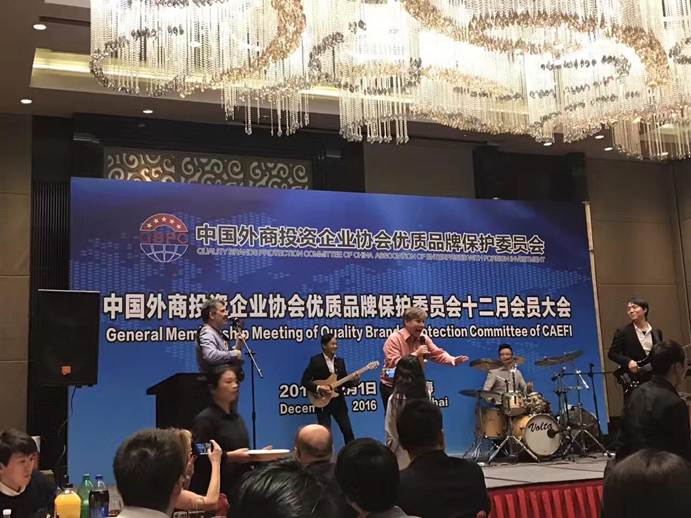
Above photo courtesy of Lin Xu, of former Chief Judge Randall Rader of the CAFC (along with many other friends) singing the Rolling Stones’ classic song “Satisfaction”. I believe Joe Simone is on the left.


To characterize CAASA as a mere alternative is perhaps the most uncharitable epitaph one could write for the QBPC.
If your grasp of the situation feels somewhat superficial, do not be overly critical of yourself; the platform was built upon a foundation of deliberate obfuscation. Born of private capital and curated by an ambitious Chinese businessman, CAASA peddled a rather ingenious sleight of hand: to domestic firms, it hinted at a proximity to the National Leading Group on Combating IPR Infringement and Counterfeits that was, at best, aspirational; to its foreign counterparts, it whispered of exclusive, expedited pathways through the thickets of Chinese e-commerce —Amazon, most interestingly, among them. Once the lure was taken, like classic bait-and-switch, revealing CAASA’s true utilitarian function: to steer enforcement work and budgets toward a separate IP service agency, lined squarely in the businessman’s own pockets.
Wonder what draws the multinational firms to such an orbit? Often, the peculiar magnetism of these firms lies in the autonomy granted to their local lieutenants—a mandate to act, if not always to reflect. CAASA, with its remarkably elastic standards of compliance, offered a temporary sanctuary for activities the more fastidious QBPC would have discarded out of hand. Yet, what serves as a convenient short-term reprieve for the local office may, in the fullness of time, prove a systemic liability. In the world of corporate reputation, the bill for such loose affiliations has a habit of coming due.
LikeLike
I would like to publish this as a critique – but I have heard critiques from both sides. If you have links and factual support that would be great – what you are saying sounds as if CAASA suffers from the same institutional legal infirmities as QBPC. I don’t see why one would, as a foreign company, need support for complaints to Amazon (for example). What are the standards for compliance? etc. I am not asking for a dissertation – perhaps a shorter versrion that is more fact based would be helpful.
LikeLike