
My new article “Process Tracing China’s Pharmaceutical IP Reforms: Foreign Pressure, Domestic Innovation, and Institutional Change” is now available on SSRN at https://papers.ssrn.com/sol3/papers.cfm?abstract_id=7472640. I traced four major pharma-specific IP reforms in light […]
Data as Intellectual Property: China’s Experiment
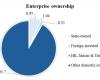
This article analyzes China’s Data IP experiment based on the “Three Types Separation” rule from the 2022 Data Twenty Measures. Three parallel registration systems run by the China National Intellectual Property Administration, the National Data Administration and the Ministry of Finance regulate data IP, data property rights, and data assets respectively. Pilot results and Zhejiang surveys reveal domestic private enterprises dominate registrations, mostly for internal data product development. Courts treat Data IP certificates as preliminary evidence under the Anti-Unfair Competition Law. Despite booming registration volume, institutional coordination and immature data trading markets remain challenges for the system.
Measuring FRAND Value in ZTE v. Samsung
China’s recent global FRAND determination in ZTE v. Samsung has attracted attention because it valued ZTE’s SEP portfolio at nearly twice the level of a contemporaneous English court decision. This article argues that the more important issue is not the royalty rate itself, but the methodology used to measure technological contribution. The Chongqing court relied heavily on declared SEP-family shares, portfolio metrics, territorial weighting, and other quantitative indicators that are closely associated with longstanding Chinese innovation policies encouraging patent accumulation, standards participation, and portfolio expansion. By comparing the decision to earlier Chinese FRAND jurisprudence, the English Samsung decision, USPTO research, and broader debates over Chinese patent statistics, the article explores whether these metrics accurately measure technological contribution or instead reward portfolio scale and geographic concentration. The case may signal an important shift in Chinese FRAND adjudication from disputes over the meaning of FRAND to a deeper debate over how FRAND value itself should be measured.
The WTO’s Arbitral Decision on Chinese SEP Practices in DS/611: Getting Closer to the Right Kind of Decision
On July 21, 2025, the arbitrators in DS/611 (the EU complaint regarding Chinese SEP practices) made their decision on the appeal from the initial panel decision. From my perspective, this decision was […]
The Revised US-China Science and Technology Agreement – A Narrow Bridge To Drive Further Cooperation
The State Department has recently posted the revised US-China Science and Technology Agreement. The revised agreement was concluded in the waning months of the Biden Administration. The revised STA is more narrowly focused on government to government cooperation. It only partially addresses the range of IP-related issues. Nonetheless, it provides a framework for future cooperation.
US-China Tech Competition Workshop And Other Events

Asia Society is hosting a virtual workshop on US-China tech competition on February 4, 2025. In addition on February 6, 2025, Pomona College is hosting a lecture on the challenge of translating FRAND into Chinese.
House Judiciary Committee Holds Hearing on Patents, Standards and Lawfare

On December 18, 2024, I was honored to testify before the House Judiciary Committee, Subcommittee on Courts, Intellectual Property and the Internet. These hearings were on “IP and Strategic Competition with China.” […]
Some Observations on SAMR’s New Antimonopoly Guidelines for SEPs
SAMR’s new Antimonopoly Guideline for SEPS suggests possible new enforcement pathways for the agency, including areas that may be of concern to foreign licensors.
Oppo v. Nokia in Context
The recent decision in Oppo v Nokia Oppo v. Nokia (2022渝01民初1232号 presents some troubling issues concerning global rate setting, the role of the WTO and China’s interpretation of FRAND.


