
Zhao Ye of the Jingtian & Gongcheng law firm in Beijing has written an excellent report, “Trade Secret Adjudication Trends of the Supreme People’s Court IP Tribunal (2025) (the “Report”) (see below).
The Report is “a systematic analysis based on publicly available judgments of the SPC IP Tribunal in 2025.” While the Report focuses on patterns within published SPC cases, there are also possible broader implications that I have identified, particularly regarding judicial signaling, administrative reform, and foreign utilization.
In 2023, the SPC undertook a jurisdictional adjustment where it ceased accepting new non-major trade secret and technical secret cases. According to the Report, 2025 became a pivotal year in which the SPC IP Tribunal concluded the remaining complex and significant legacy cases. From May 2025 to late January 2026, the SPC-run China Judgments Online database published a series of trade secret judgments rendered by the SPC IP Tribunal in 2025. These cases substantially increased damage awards, and included important circumstantially influential decisions that may serve to guide the public and courts, even if not binding precedent, involving shifting the burden of proof, sanctions for evidence spoliation, full-chain piercing of infringing party liability, and the recognition of the independence of civil proceedings from criminal proceedings.
In a civil law, non-precedential system such as China’s, these cases send important signals to other courts about the kinds of decisions that the SPC believes are consistent with Chinese law and China’s international commitments. In my view, they also serve to guide lower courts in similar disputes, although they are not formally considered citable. In addition, the cases may be preforming important strategic signaling in light of their timing: they were published shortly before the originally proposed dates for a summit between Xi Jinping and President Trump (late March/early April), and were also published during the ongoing Section 301 investigation of China’s implementation of trade secret and other commitments in the Phase One Trade Agreement. I have separately discussed other recent signaling developments in trade secret protection and pharmaceutical post filing data supplementation, including pharmaceutical regulatory data protection.
Zhao Ye has taken the appropriate approach of comparing official case publication statistics as a numerator and case conclusion data separately reported by the SPC as a denominator, to develop a case publication percentage. The numbers do not precisely correspond, as cases may be published in a year or years after their decision. This is an approach I have previously used to determine patent publication rates. Zhao Ye’s data includes 2026 publication of cases for 2025 as he is focused on the jurisdictional “send-off” of pending trade secret cases. For China, the fraction for published cases was 11/51, or approximately 22%. Due to declining transparency levels, and a nearly 80% non-publication rate, it is difficult to determine if this is a representative sample of trade secret cases that were on the SPC’s docket.
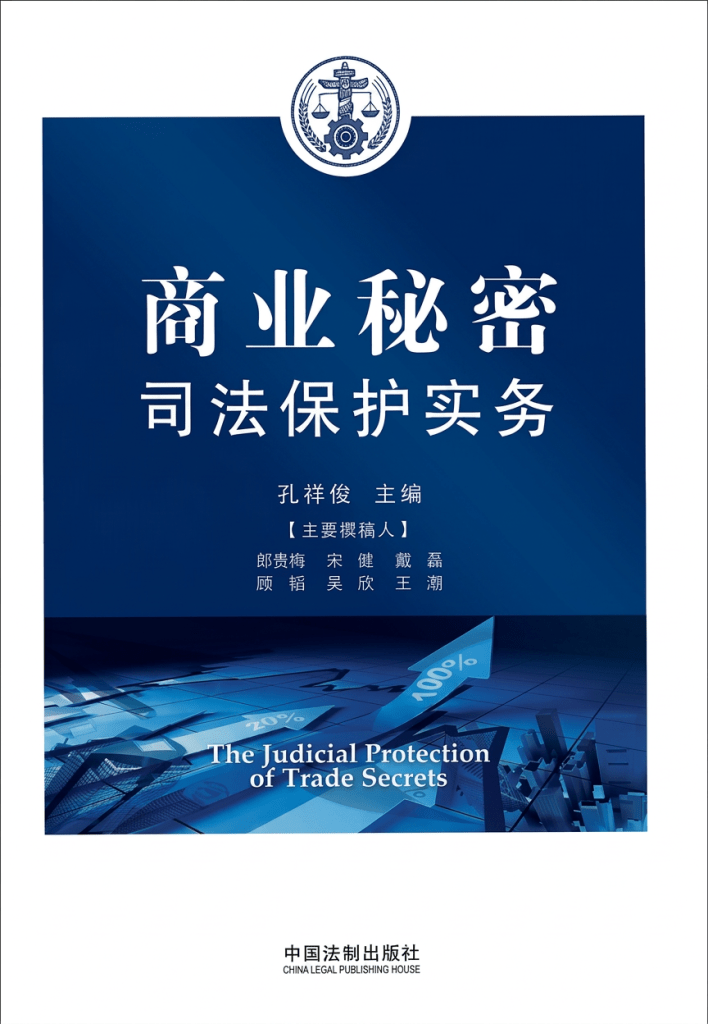
However, Zhao Ye’s focus is not on the statistical reliability of the cases, but on how this sample compares longitudinally with previously published cases. The case sample is therefore an indication of SPC adjudication priorities in trade secret cases, rather than a reliable indicator of how the SPC or other Chinese courts have generally viewed trade secret cases. Viewed over time, and in comparison to earlier SPC studies (such as in a 2013 book written by the SPC, above, which I have separately blogged about), the cases also help document China’s long trajectory of improvement in trade secret civil enforcement.
Three types of cases dominate among these 11 in the Report: (a) wholesale departure of former employees or executives; (b) premeditated mass downloads; and (c) direct sale of trade secrets as a commodity. The largest category, six cases, consisted of the wholesale departure of employees or executives, and is another reminder of the importance of non-compete agreements in addressing trade secret theft. Another category involves breaches of trust by business partners.
All 11 published cases were reversed or substantially modified on appeal. This is an unusually strong signal of the SPC IP Tribunal’s corrective posture that Zhao Ye has identified. In five of these cases, the first instance court found no infringement, which was reversed on appeal. In another group of four cases, the lower courts’ damage awards were increased. Evidence spoliation increased damages in four cases. Zhao Ye points to this pattern as reflecting a systematic correction of the previously prevalent tendency toward undervaluation and under-protection of trade secrets.
Several of the cases relied on a substantive shifting of the burden of proof, while four cases dealt with “dismantling fabricated independent R&D defenses.” Several cases also involved what Zhao Ye calls “salami slicing,” an attempt to disaggregate the plaintiff’s process flow or equipment structure into isolated technical features and separately cite different references to argue that each component was in the public domain.
None of the cases appear to involve a foreign party. Interestingly, trade secret theft via computer intrusions, a topic frequently discussed in the United States, is not a category in the Report.
Do 11 cases portend a trend? This may be the situation, considering the circumstances under which these cases were published. Zhao Ye has noted that these 11 cases may, however, represent a kind of “survivor bias” of difficult cases that the SPC was left with at the end of its tenure over trade secret cases. Moreover, case reversals such as these may suggest either that the underlying problems are extensive and require systemic correction by the SPC, or that such problems can be addressed through publication of these types of cases. Zhao Ye has nonetheless made a convincing argument that the SPC is engaged in a form of “final calibration” of trade secret adjudication standards that is likely to exert broader influence on judicial practice going forward. I am cautiously optimistic.
Zhao Ye suggests that trade secrets may serve as an “entry point” for a broader shift in damages doctrine. That hopeful assessment may be premature. In my view, trade secrets are better understood historically as a lagging rather than pioneering area of IP legal reform, with fewer amendments to relevant laws over the years than other areas, fewer criminal and administrative cases, late consideration of the availability of preliminary injunctions, etc. Unlike patents, where valuation, innovative impact, and public policy concerns may be more contested, trade secret cases present a more straightforward setting for deterrence, particularly where criminal or quasi-criminal bad faith, employee mobility, and evidentiary obstruction are central. The SPC’s approach in these cases therefore appears less an experimental advance into new doctrinal territory than a targeted effort to correct under-deterrence in a domain where consensus is easier to achieve. This also helps explain why the cases involve only domestic parties and why the developments, while significant, have not yet translated into clear evidence of broader systemic change or foreign utilization.
These developments can also be understood through the lens of China’s broader pattern of responding to external and internal pressures on intellectual property. The SPC’s publication of these cases appears to function as a form of strategic signaling: highly visible, adjudication-based guidance that demonstrates responsiveness to concerns about under-protection. In their current form, they stop short of binding, system-wide legal change which would need to occur through further judicial interpretations or designation as a guiding case. This stands in marked contrast to earlier periods when administrative enforcement mechanisms were emphasized, often in ways that were not well aligned with private rights or foreign concerns. The more recent SAMR trade secret rules (部门规章) suggest a parallel evolution on the administrative side toward a more modern framework, but it remains unclear how these new rules will be applied in practice. Unfortunately, neither the SPC cases nor the SAMR trade secret rules provide meaningful insight into the extent to which foreign rightsholders are utilizing these mechanisms. Nonetheless, the emerging judicial practice reflects a more rights-protective orientation that foreign lawyers and rightsholders may ultimately find more consistent with their own expectations. Zhao Ye’s research has also been profiled in Maia Edilashvili Biermann’s article, “China’s quiet revolution in trade secret damages” (IAM, April 9, 2026).


