
China appears to have taken a meaningful step toward complying with the WTO’s DS611 ruling by stepping back from its controversial use of anti-suit injunctions in SEP disputes, with no new ASIs reported since the decision and indications—primarily through WTO statements—that the Supreme People’s Court withdrew the policy. However, implementation remains incomplete. The underlying doctrine has not been clearly repudiated, key judicial materials remain difficult to locate, and earlier decisions continue to be inconsistently published, often in anonymized or unstable form. The WTO arbitrators’ expansive interpretation of “decisions of general application” raises additional concerns, as it extends TRIPS transparency obligations beyond formal precedent in ways that may not align with how Chinese courts actually develop policy. At the same time, the United States’ attempt to narrow transparency obligations was rightly rejected. With parallel developments in Europe and the UK, anti-suit injunctions are no longer uniquely Chinese, but part of a broader global struggle over jurisdiction in SEP disputes. China’s response reflects a cautious retreat rather than a full policy reversal, leaving important questions about transparency, judicial signaling, and future practice unresolved.
Implications of the Recent WTO Ruling on China’s SEP Practices
The WTO recently released its decision in DS 611, the IP enforcement case involving China’s SEP practices and transparency of China’s judicial decision making. The case makes some progress on China’s important transparency obligations.
House Judiciary Committee Holds Hearing on Patents, Standards and Lawfare
On December 18, 2024, I was honored to testify before the House Judiciary Committee, Subcommittee on Courts, Intellectual Property and the Internet. These hearings were on “IP and Strategic Competition with China.” […]
CHINESE THREE DIMENSIONAL SEPS: RECENT CASES, THE WTO, AND TRANSPARENCY
Three major court decisions involving SEPS, patents and foreign companies have been recently decided in China. In addition, the EU has recently released two of its submissions to the WTO regarding its dispute with China on antisuit injunctions. Nokia has also announced a global settlement with Oppo. What does the future hold for SEP litigation in China and the WTO dispute?
Australia, US, and EU Submissions at the WTO on China and Anti-Suit Injunctions
By assembling the briefs submitted by the EU, Australia and the United States in the WTO case DS611, a stark difference in approach emerges between the United States and the EU/Australia. It appears that the United States is allying itself more closely with China, perhaps with a goal of limiting WTO jurisdiction in certain areas. At the same time, however, the United States appears to be retreating on its long-held commitments to increasing transparency in China’s judicial and legal system.
Are Chinese Courts Out to “Nab” Western Technology: An Inconclusive WSJ Article
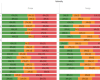
How accurate was a Feb. 20, 2023 article of the Wall Street Journal that reports on a new development in China’s efforts to nab Western technology? I discuss what the available data says and refute the notion that this development is new. It nonetheless remains concerning.
The Pushmi-Pullyu of Chinese Anti-Suit Injunctions and Antitrust in SEP Licensing
The sharp drop in granting of Antisuit Injunctions by Chinese judicial authorities and the recent amendments to China’s Antimonopoly Law and related rules, suggest that China may have begun to reprioritize the Antimonopoly Law in FRAND rate-setting disputes.
Three Countries Seek to Join the EU SEP Case
The United States, Japan, and Canada have now asked to join the EU consultation request with China at the WTO regarding Chinese practices in issuing anti-suit injunctions (“ASIs”) for standards-essential patents (SEPs). […]
Recent Translations and Comments on Laws and Cases
Translations and comments are made available on patent and trademark examination guidelines, Seed Law, Plant Variety JI, AUCL JI, and Oppo v Sharp. With regard to the SPC decision in Oppo v Sharp a question is raised concerning China’s efforts to regulate and take jurisdiction over global SEP royalty rate setting.
China Responds to EU Article 63 Request
On September 7, 2020, China responded to the EU Article 63 request. The one-page Chinese response repeats the position taken by China in 2006, that Article 63 only affords an opportunity for a member to make a transparency request of another member. As China notes in its response, “there is no such obligation under the TRIPS Agreement for China to respond.” This position repeats the position taken by China that “the TRIPS Agreement only refers to a Member’s right to request information, but there is no mention of a corresponding obligation of the requested Member to actually follow the request.” (Para. 8, P/C/W/465, Jan. 23, 2006). As this prior Article 63 response appears to be the template for some elements of the current response, I have inserted it below. The Chinese responses might be understood as rejecting a teleological interpretation of the TRIPS Agreement to effectuate its purposes, or one based on the good faith of the parties, as it is difficult to conceive of the reason for a treaty provision that offers an opportunity to make an inquiry of another country, but does not require that country to respond. The response also ignores the significant developments in case law in China in recent years.

 China IPR - Intellectual Property Developments in China