
China’s recently released 2026 trade secret rules are best understood not as a major legal reform but as an administrative modernization of an enforcement system badly in need of an update. Although international pressure played a role, the rules largely respond to China’s own technological development and growing need to protect confidential information. They show that IP change in China is driven at least as much by domestic economic evolution as by foreign demands.
China’s Patent Injunction Report: Key Insights and Recommendations
Should China make injunctions more difficult in patent civil cases? A recent report from a Chinese think tank makes the argument for such changes. The change, if implemented, could particularly impact foreign rights holders.
IPR’s and RPI’s: USPTO Takes an Important Step Forward
I was pleased to see that in a Memorandum issued on October 28, 2025, USPTO Director Squires has changed the role of real parties in interest (RPI) determinations in inter partes review […]
Insights on the China/EU TRIPS Dispute: DS/611
I will be a discussant on the recent WTO arbitral decision in DS/611 before a virtual meeting Friends of the Multilateralism Group (FMG). The FMG brings together WTO Ambassadors (past and present), retirees […]
Implications of the Recent WTO Ruling on China’s SEP Practices
The WTO recently released its decision in DS 611, the IP enforcement case involving China’s SEP practices and transparency of China’s judicial decision making. The case makes some progress on China’s important transparency obligations.
The Revised US-China Science and Technology Agreement – A Narrow Bridge To Drive Further Cooperation
The State Department has recently posted the revised US-China Science and Technology Agreement. The revised agreement was concluded in the waning months of the Biden Administration. The revised STA is more narrowly focused on government to government cooperation. It only partially addresses the range of IP-related issues. Nonetheless, it provides a framework for future cooperation.
Navigating the New Chinese Regulations on Foreign IP Disputes
On March 13, 2025, China’s State Council issued new regulations regarding resolving foreign-related IP disputes. These comments discuss how the regulations might be used to encourage Chinese government responses to foreign government and judicial agencies’ actions against Chinese companies defending or asserting their rights overseas.
US-China Tech Competition Workshop And Other Events

Asia Society is hosting a virtual workshop on US-China tech competition on February 4, 2025. In addition on February 6, 2025, Pomona College is hosting a lecture on the challenge of translating FRAND into Chinese.
House Judiciary Committee Holds Hearing on Patents, Standards and Lawfare
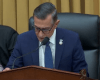
On December 18, 2024, I was honored to testify before the House Judiciary Committee, Subcommittee on Courts, Intellectual Property and the Internet. These hearings were on “IP and Strategic Competition with China.” […]
Upcoming Quincy Program on Rekindling Chinese S&T Cooperation
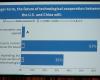
On January 7, 2025, from 12:00 pm – 1:00 pm EST, the Quincy Institute and the Asia Society of Northern California will be hosting a discussion on “Re-Kindling the U.S.-China S&T Relationship: […]

 China IPR - Intellectual Property Developments in China